

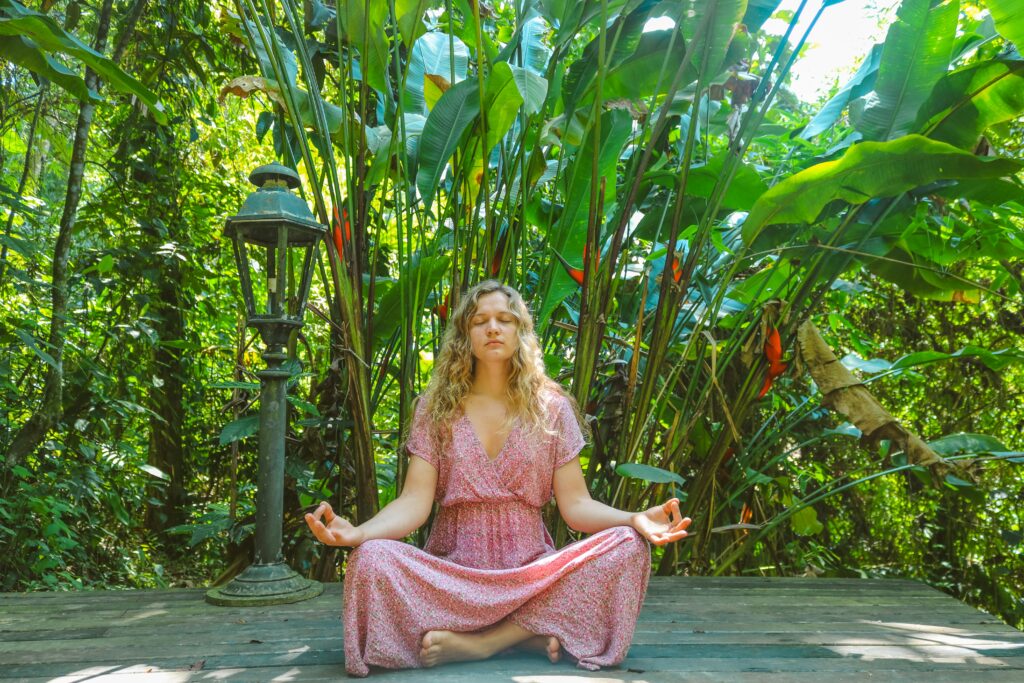
1. What Does Meditation Entail?
The practice of meditation involves: Focusing the mind, Observing unattached thoughts, Reaching profound inner serenity and clarity, establishing a connection with your actual awareness. It entails deliberately focusing attention, typically on breath, a mantra, a feeling, or just awareness. Meditation is not: Putting an end to everything Getting away from reality Daydreaming It is becoming conscious of one’s ideas without letting them control one.
2. The History and Origins of Meditation
2.1 Historical Origins The practice of meditation dates back thousands of years, mostly to: India (Upanishads, yoga, and Vedic traditions) Buddhism (Zen, Vipassana) Jainism Taoism in China Islamic mysticism, or sufism The Vedas (1500–1000 BCE) contain the first recorded mention of Dhyana. 2.2 Contemporary Adoption These days, meditation is frequently utilized for: Reduction of stress Mental well-being Productivity Spiritual growth Psychologists, physicians, and health specialists around the world increasingly suggest it.
3. The Science of Meditation
Through neuroplasticity, meditation modifies the structure of your brain. 3.1 Affected Brain Regions The amygdala decreases, which reduces stress, anxiety, and fear. Thickening of the prefrontal cortex improves concentration and decision-making Growth of the hippocampus leads to better memory and learning Overthinking is lessened while using the Default Mode Network (DMN).
3.2 Modifications in Physiology Heart rate decreases Blood pressure decreases The stress hormone cortisol falls The immune system is stronger The body transitions from fight-or-flight mode → to rest-and-digest mode during meditation.
4. Meditation Types
The most popular forms are as follows:
4.1 Vipassana, or mindfulness meditation observing feelings, ideas, and experiences without passing judgment. Pay attention to your breath or your body’s sensations. increases awareness of the present moment. Ideal for: managing emotions, anxiety, and stress.
4.2 Meditation with Concentration (Focused Attention) concentrating on a specific item, such as: Breath Candle flame Sound Mantra Ideal for: improving mental clarity and focus.
4.3 Meditation on Mantras repeating a holy word or sound (like “Om”). aids in blocking distracting ideas. Ideal for: spiritual development and mental relaxation.
4.4 TM, or transcendental meditation employs customized mantras. spent 20 minutes practicing twice a day. brings about a deep sleep. Ideal for: attention, creativity, and stress reduction.
4.5 Meditation Under Guidance You are guided through visualization by an instructor or audio. includes body scans, healing visuals, and calming settings. Ideal for: beginners, rest, and recovery. 4.6 Meditation on Loving-Kindness (Metta) sending love and compassion to oneself and other people. aids in letting go of negativity, wrath, and resentment. Best for: empathy and emotional healing.
4.7 Meditation on Chakras focuses on the body’s chakras, or energy centers. makes use of music, breath, and vision. Ideal for: emotional stability and energy balance.
4.8 Zen (Zazen) Meditation sitting meditation with an emphasis on breathing and posture. awareness-based mental emptying. Ideal for: inner tranquility, understanding, and discipline.
4.9 Yogic Sleep, or Yoga Nidra meditation while lying down. profound calm in between slumber and awareness. eases nervous system strain. Ideal for relieving stress and sleeplessness.
5. A Step-by-Step Guide to Meditation
Use this easy technique:
Step 1: Locate a Calm Area
Take a comfortable seat in a chair or on the floor.
Maintain a straight spine.
Step 2: Shut Your Eyes and Unwind
Let your shoulders drop.
Breathe more slowly.
Step 3: Pay Attention to Your Breath
Take a deep breath.
Breathe out slowly.
Feel the air coming in and going out.
Step 4: Allow Thoughts to Flow
Avoid fighting your thoughts.
Just pay attention and go back to your breathing.
Step 5: Keep going for five to twenty minutes.
Start with five minutes.
Increase gradually to 20 to 30 minutes.
Step 6: Finish Slowly
Gently open your eyes.
Before you move, take a moment to remain motionless.
6. Meditation’s Advantages
6.1 Emotional and Mental Advantages
lessens depression, anxiety, and stress
enhances emotional stability and mood
improves concentration, memory, and mental capacity
gets rid of overanalyzing
Boosts originality
improves one’s ability to solve problems
fosters quiet and patience
6.2 Health Advantages
reduces blood pressure
enhances cardiac health
lessens migraines and pains
improves the quality of sleep
bolsters the immunological system
maintains hormone balance
lessens persistent pain
6.3 Spiritual Advantages
increases self-awareness
brings about inner tranquility
enables you to access your higher consciousness.
aids in comprehending your goal
increases empathy and compassion
6.4 Advantages for Everyday Life
Improved decision-making
Better connections
Enhanced output
Increased self-assurance
Decreased irritability
Improved emotional regulation
Living with more awareness and consciousness
7. Typical Myths Regarding Meditation
“I have to stop thinking.”
You will always have thoughts, but meditation teaches you to let go of them.
“Only those who are spiritually inclined should meditate.”
Everyone is eligible, including elders, athletes, workers, and students.
“I am short on time.”
It only takes five minutes a day to get started.
“I have to sit with my legs crossed.”
Any position that is comfortable will do.
8. Advice for Novices
Begin modestly: two to five minutes every day
Practice regularly.
Avoid passing judgment on your experience.
If necessary, use guided meditations.
Select a position that is comfortable.
Every day, practice at the same time.
9. How Often and When Should You Meditate?
Ideal Times:
Brahma Muhurta in the early morning
Prior to going to bed
When taking stress-relieving breaks
Optimal Frequency:
Start with five to ten minutes per day.
Increase to 20 to 30 minutes.
During stressful times, even a minute of conscious breathing might be beneficial.
10. Final Thoughts
A potent technique that changes the body, mind, and life is meditation. It supports your ability to maintain composure, concentration, emotional equilibrium, and spiritual alignment. Regular meditation practice helps you become a calm, focused, and conscious version of yourself.